project impact (oecd)
A New Development Opportunity for the EGTC Future Paths
The OECD, together with the European Commission and its Directorate-General for Regional and Urban Policy (DG REGIO), has launched the international project IMPACT – Interreg Mechanism for Promoting Active Communities and Territories. This initiative represents one of the most important new European initiatives in the field of cross-border development, aiming to strengthen border regions through the active involvement of local communities, municipalities, businesses, tourism organizations, and civil society.
The region covered by the European Grouping of Territorial Cooperation “Future Paths Ljubljana – Novo mesto – Karlovac – Zagreb”, together with its members, has been selected among the pilot cross-border regions that will cooperate with the OECD in developing new models of joint cross-border development between Slovenia and Croatia along the railway corridor Ljubljana – Novo mesto – Karlovac – Zagreb. In addition to the lead partner EGTC Paths of the Future (European Grouping of Territorial Cooperation “Future Paths Ljubljana – Novo mesto – Karlovac – Zagreb”), the project also actively involves Development Centre Novo mesto Ltd., LAG Vallis Colapis, and FLAG4rijeke.
What does the IMPACT project actually mean?
The IMPACT project is based on the concept of community-led local development (CLLD). The OECD emphasizes that many European border regions still lag behind in development due to administrative barriers, insufficient transport connectivity, limited labour mobility and fragmented services.
The project aims to help pilot regions prepare concrete cross-border development strategies directly focused on:
• improving infrastructure and mobility while reducing mobility poverty,
• encouraging entrepreneurship and strengthening the local economy,
• developing sustainable tourism,
• increasing connectivity among border populations,
• preparing joint projects for European funding opportunities.
The OECD will provide pilot regions with expert support, analytical tools, international workshops, and assistance in preparing concrete project and investment plans.
What will be developed within the project?
For the area connected by EGTC Future Paths, the project represents an opportunity to prepare the first comprehensive cross-border development strategy integrating:
• transport infrastructure,
• entrepreneurial and innovation initiatives,
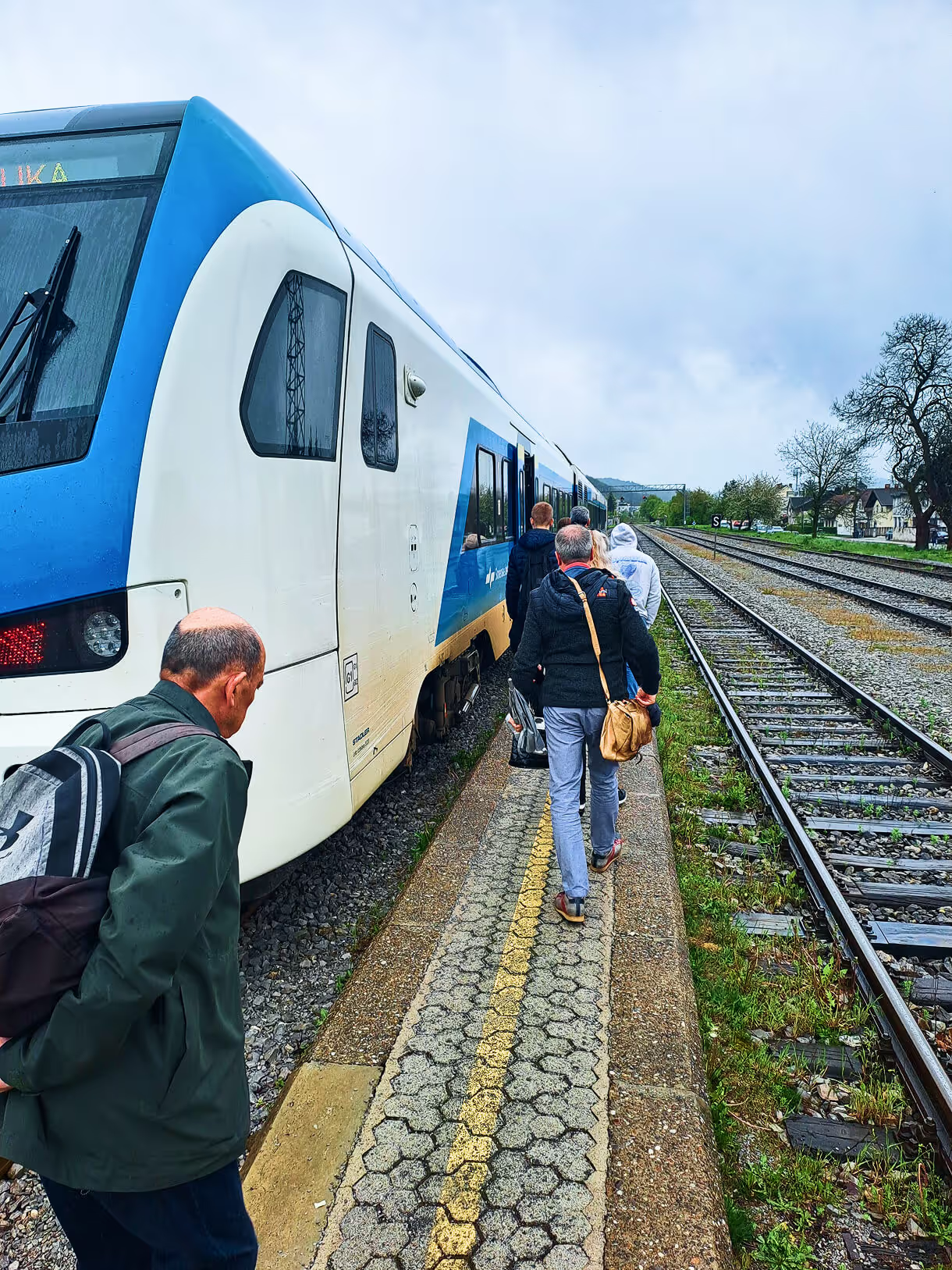
• tourism products along the Karlovac – Novo mesto – Ljubljana railway axis,
• river regime management,
• local communities on both sides of the border.lokalne skupnosti na obeh straneh meje.
Special emphasis will be placed on addressing so-called mobility poverty – situations in which residents have limited access to jobs, education, healthcare services and other essential activities due to poor transport connections.
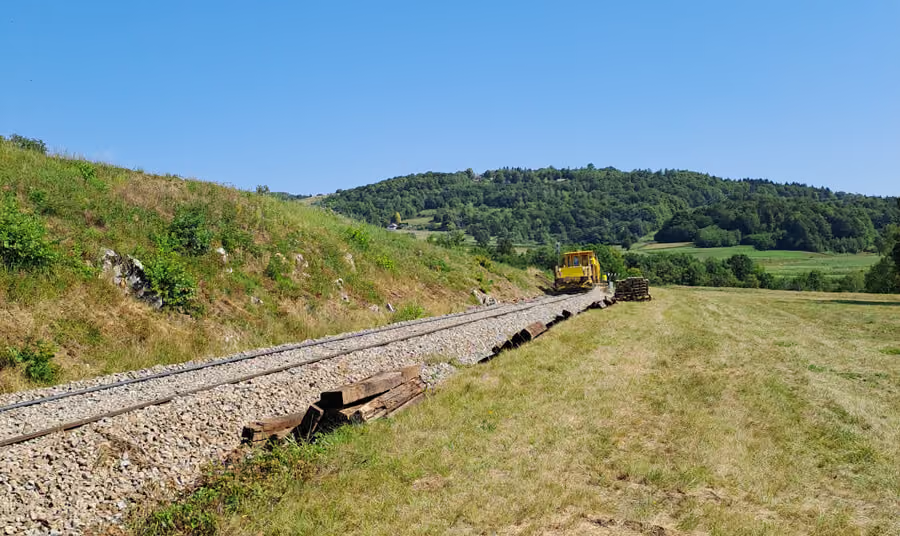
This means the focus will be on improving railway connectivity and implementing planned road connections, developing multimodal transport, integrating public transport systems, improving accessibility of rural areas and connecting tourism with mobility.
What does this mean for EGTC Paths of the Future?
Being selected among the OECD pilot regions represents significant international recognition of the organization’s work to date. The organization has been acknowledged as:
• a relevant cross-border development partner,
• an institution with a clear development vision,
• a platform connecting municipalities, businesses, and local communities,
• a potential leader of major European development projects in the future.
Through participation in the IMPACT project, the organization will:
• gain direct access to OECD expert knowledge,
• strengthen its international visibility,
• establish new connections with European regions,
• improve opportunities for obtaining European funding,
• develop concrete development projects with a higher level of readiness for financing.
The project will also significantly contribute to strengthening the institutional capacity of the European Grouping of Territorial Cooperation itself, as the OECD places particular emphasis on developing effective cross-border governance structures.
a new development phase for the cross-border area
Participation in the IMPACT project marks the beginning of a new development phase along the Ljubljana – Novo mesto – Karlovac – Zagreb axis, while also creating additional opportunities for Southeast Slovenia and Karlovac County. The key added value of the project lies in the fact that it is not merely about preparing documents, but about designing concrete development solutions that will have a direct impact on the quality of life of people living along the border.
The vision of the European Grouping of Territorial Cooperation is to create a modern, connected, and development-oriented cross-border region.


.avif)
.avif)